Most people in Ontario don’t have one road to permanent residence. They have three or four, and picking the wrong one can cost a year.
The map changed again this month. Canada released its 2027–2029 Immigration Levels Plan on November 5, 2026, and Ontario rebuilt its nominee program in the summer. Here are the immigration pathways Canada offers right now, who each one suits, and how they lead to citizenship.
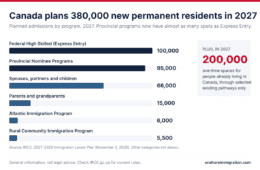
Quick answer: The main immigration pathways to Canada PR in 2026 are Express Entry, a Provincial Nominee Program such as Ontario’s Workforce Priority stream, and family sponsorship. Canada plans to admit 380,000 permanent residents in 2027, with about 64% through economic programs, plus up to 200,000 extra spaces for people already in Canada.
What are the main immigration pathways to Canada in 2026?
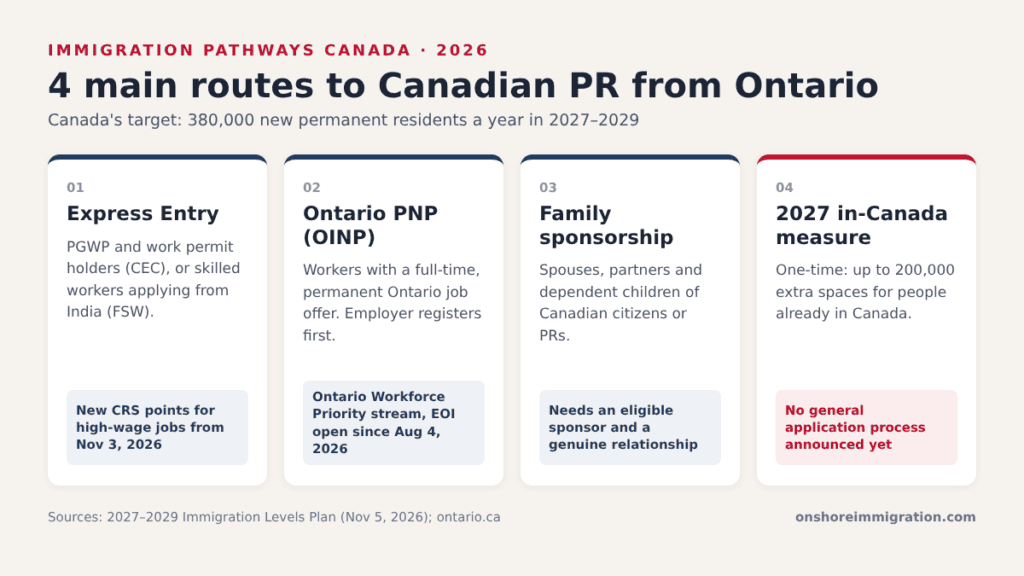
Most applicants use one of four routes. Your best one depends on where you live, your work experience and whether you have a job offer.
| Pathway | Best for | Key requirement |
|---|---|---|
| Express Entry: Canadian Experience Class | PGWP and work permit holders in Ontario | 1 year of skilled Canadian work and a language test |
| Express Entry: Federal Skilled Worker | Skilled workers applying from India | CLB 7, skilled experience, CAD 15,263 proof of funds (single) |
| OINP: Ontario Workforce Priority stream | Workers with a permanent Ontario job offer | Employer registers first; CLB 6 for TEER 0–3 jobs |
| Family sponsorship | Spouses, partners and children of citizens or PRs | An eligible sponsor and a genuine relationship |
What changed in the 2027–2029 levels plan?
Canada kept its target at 380,000 new permanent residents a year for 2027–2029. The bigger news is a one-time measure of up to 200,000 extra spaces in 2027 for people already living in Canada.
Half of those spaces are for workers, chosen through Express Entry and provincial programs with the provinces. The other half covers humanitarian cases and in-Canada family applications. No general application process has been announced yet, so ignore anyone selling a “200,000 quota” spot.
For Ontario workers, the message is clear: skilled experience inside Canada is now the strongest card you can hold.
Which pathway fits you?
- On a PGWP with 12+ months of skilled work: start with Express Entry. Since November 3, 2026, Express Entry gives extra points for high-wage jobs.
- A permanent job offer from an Ontario employer: apply through our Ontario Immigrant Nominee Program support. A job outside Toronto earns up to 15 more EOI points.
- Married to a Canadian citizen or PR: look at spousal sponsorship.
- In India with no Canadian experience: Federal Skilled Worker, or study and work in Canada first.
Example: Arjun, from Pune, works as a software developer in Mississauga on a PGWP. His job is on IRCC’s high-wage list, so his CRS score rose on November 3. His employer also offered him a permanent role, which opens the OINP. He runs both pathways at once and takes whichever invitation comes first. (Illustrative profile, not a real client.)
How do immigration pathways lead to Canadian citizenship?
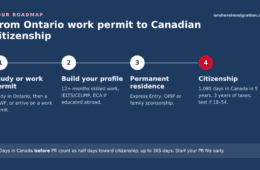
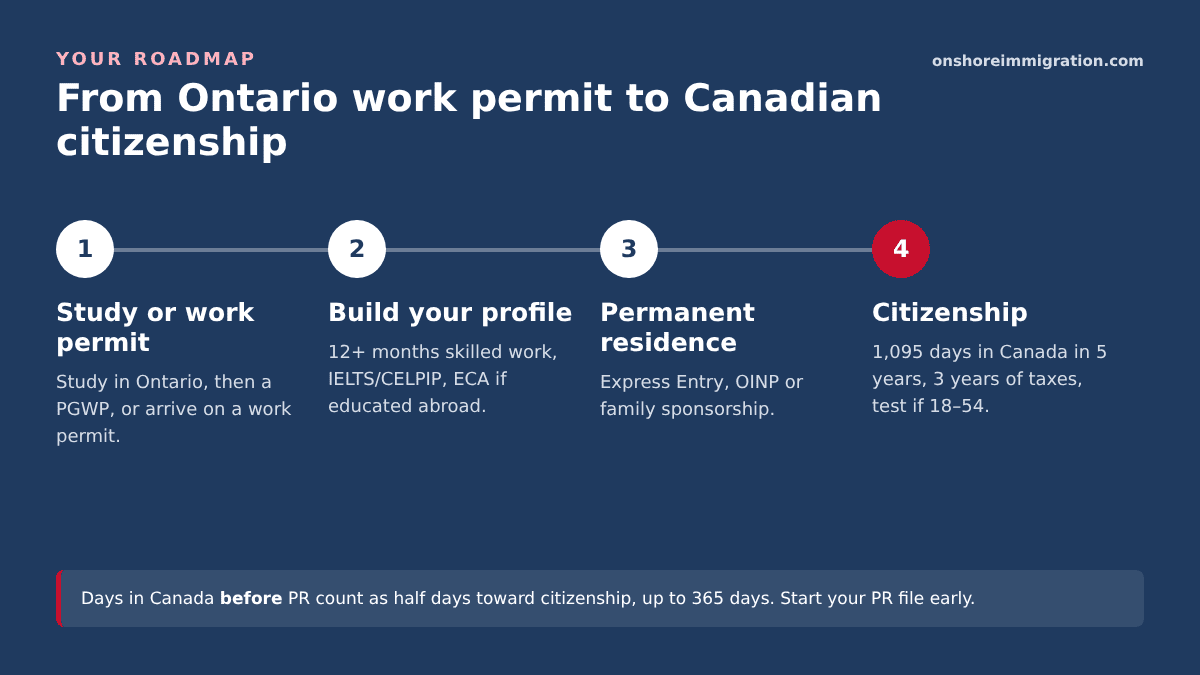
PR is not the finish line. To apply for citizenship, you need 1,095 days of physical presence in Canada within five years, three years of tax filing, and, if you’re 18 to 54, proof of language ability and a passed test.
Some time before PR can count. Each day in Canada as a temporary resident in those five years counts as half a day, up to 365 days. That’s one more reason to start your PR file early. Our Canadian citizenship application guide walks through every step.
Do you need an immigration consultant in Ontario, Canada?
No, you can apply yourself. A consultant helps when two pathways overlap, your NOC code is unclear or you’ve been refused before. Always check the licence on the CICC public register first. Our guide on how to choose an immigration consultant in Ontario, Canada lists the red flags.
FAQs
What is the easiest immigration pathway to Canada from India?
There’s no single easiest route. Skilled workers often start with Federal Skilled Worker, while many students come through study, then PGWP, then Express Entry.
Is the OINP open in 2026?
Yes. The Ontario Workforce Priority stream opened its EOI portal on August 4, 2026. You need a full-time, permanent Ontario job offer.
Does time on a work permit count toward citizenship?
Partly. Each day in Canada before PR counts as half a day, up to 365 days in total.
Find your pathway
Onshore Immigration is a licensed RCIC firm in Waterloo, Ontario, serving clients across Ontario and India. Book a 30-minute consultation and we’ll compare your options, from Canadian permanent residency requirements to your realistic score, with our fee in writing.